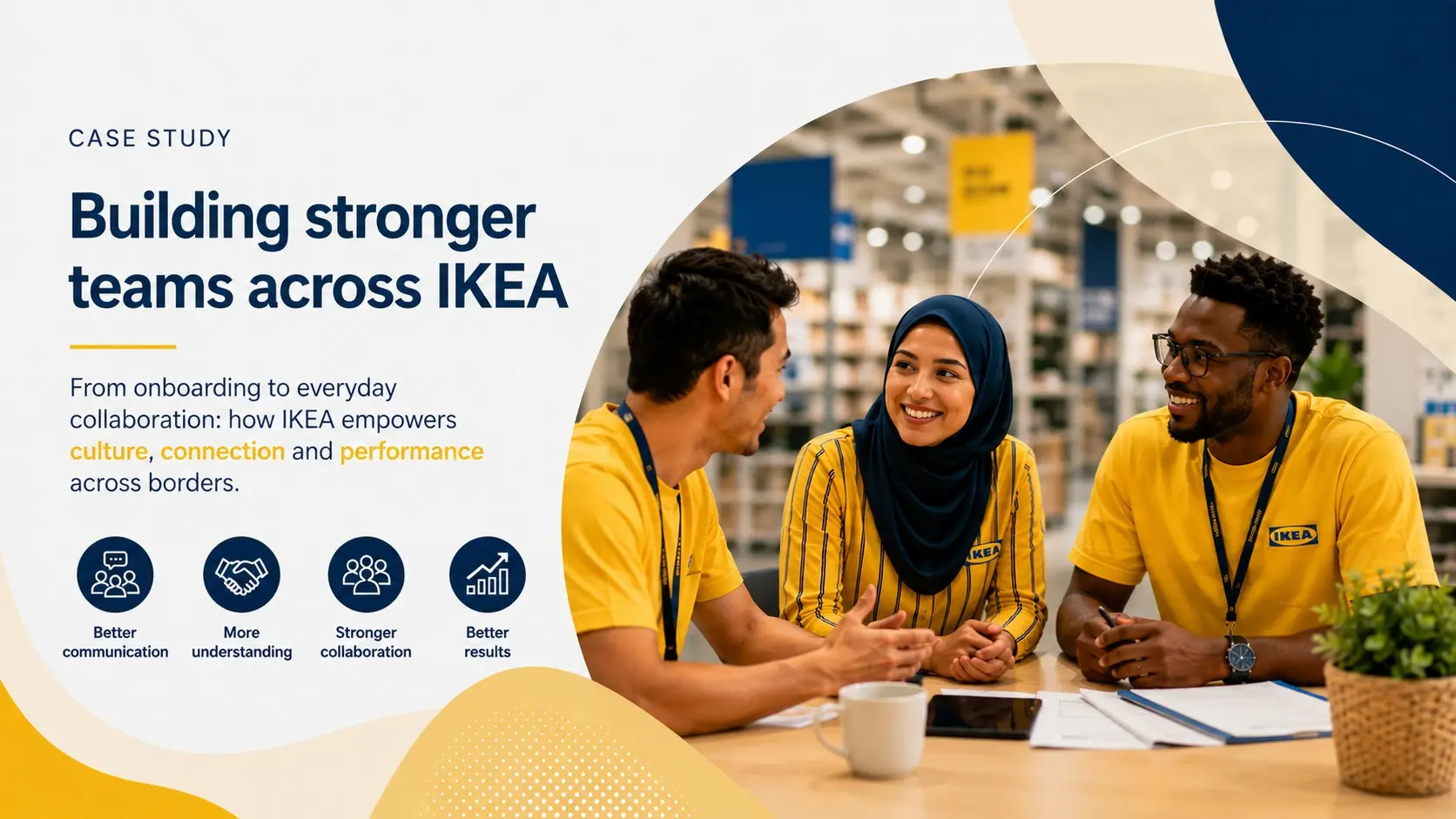
Context: building an inclusive workplace
IKEA is a global organisation with a strong commitment to diversity and inclusion. In the Netherlands, this commitment takes shape through initiatives that support people with a refugee background in entering the labour market. Through the Skills for Employment programme, IKEA offers participants the opportunity to develop skills and gain work experience within the organisation. At the same time, this creates a new dynamic. When people from different cultural backgrounds come together in the workplace, collaboration does not always develop automatically. Differences in communication, expectations, and behaviour can influence how people connect and work together.
The challenge: bridging differences in practice
Within the programme, IKEA noticed that collaboration between newcomers and existing teams was not always straightforward. Language proficiency varied significantly, which affected communication. At the same time, differences in communication styles and expectations made it more difficult for people to fully understand one another. This was not due to a lack of willingness. Rather, it reflected the reality of bringing together people with different cultural backgrounds, experiences, and ways of working. The question IKEA faced was therefore not only how to support newcomers, but how to create mutual understanding across the entire team.
The approach: creating awareness and dialogue
Mazzi-Inc. designed a cultural awareness training tailored to this context. Given the diversity in language levels, locations, and group composition, a flexible approach was essential. A four-hour training format was selected, with adjustments made where needed to ensure accessibility for all participants. The focus was not only on knowledge, but on interaction. Participants explored cultural differences in behaviour, reflected on their own assumptions, and developed a shared language to discuss these differences. Particular attention was given to recognising the positive intent behind actions—an important step in reducing misunderstandings. The programme was developed in close collaboration with IKEA and partners such as Refugee Talent Hub, and continuously adapted based on participant needs.
The impact: from barriers to understanding
The training created space for something that had previously been limited: open dialogue. Participants felt more comfortable asking questions, including towards management. Awareness of cultural differences increased, and teams became better able to interpret behaviour in context. Instead of focusing on barriers, participants began to recognise underlying intentions. For many newcomers, this also had a personal impact. They indicated that they felt heard and understood—an important condition for building confidence and engagement within the workplace.
Looking ahead
Following the initial programme, discussions are ongoing with IKEA about continuing and expanding the collaboration. The experience confirms an important insight: intercultural collaboration does not develop automatically—but with the right approach, it can become a strong foundation for inclusion and performance.
Curious about our Intercultural Skills Training Programmes?