Effective collaboration starts with
Cultural Awareness
Understanding others starts with understanding yourself.
Cultural Awareness is the first step in developing the skills needed for effective intercultural collaboration.
Our programme helps professionals recognise and interpret cultural differences,
reflect on their own assumptions, and respond thoughtfully when faced with
unfamiliar situations
Every
interaction is interpreted through a personal and cultural lens
People from different cultural backgrounds can experience exactly the same situation in very different ways.
Without Cultural Awareness, people often interpret difference as incompetence, disinterest or resistance.
With Cultural Awareness, they become curious before they judge.
Instead of reacting automatically, they learn to pause, reflect and make more thoughtful decisions about how to communicate, collaborate and build trust across differences.
These skills help professionals to:
- Understand different perspectives before drawing conclusions
- Convey their message appropriately in different cultural contexts
- Reduce misunderstandings by recognising the influence of culture
- Regulate emotions and emotional expressions
- Make more thoughtful decisions in culturally unfamiliar situations
Participants develop the ability to:
- Remain curious before making judgements
- Recognise cultural differences
- Interpret situations from multiple perspectives
- Reflect on their own assumptions and perspectives
- Respond thoughtfully in unfamiliar situations
How cultural awareness skills are developed
Lasting cultural awareness skills are developed through experience, reflection, practice and application.
Our program combines realistic scenarios, guided
reflection, interactive exercises and practical application to create
meaningful behavioral change.
Choose the learning format that fits your organisation
One organisation may need to create awareness across a large group of employees.
Another may want to develop lasting intercultural skills within a team or leadership group.
We offer different learning formats to match your objectives, audience and available time.

Introduction
→ Build awareness and start the conversation
🕒 1–2 hours
Introduce participants to the role culture plays in communication, collaboration and everyday interactions.
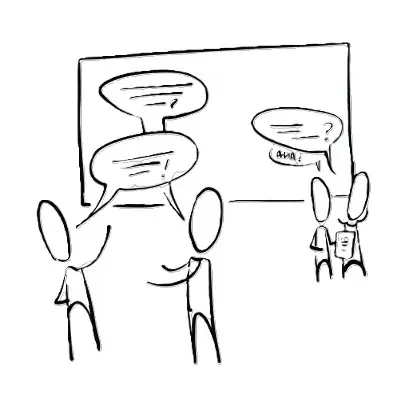
Workshop
→ Explore and practise skills for everyday collaboration
🕒 4–8 hours
Reflect on real-life situations, exchange perspectives and apply new insights in an interactive learning environment.
Training programme
→ Create lasting behavioral change
🕒 10–12 hours
Build intercultural competence through a structured learning journey that combines experience, reflection, practice and application.
Not sure which format is right for your team?
Every program can be tailored to the specific context, objectives and learning needs of your organisation.
When cultural awareness makes the biggest difference
International colleagues join your organisation
Different perspectives enrich your organisation—but they also introduce different expectations, communication styles and ways of working.
Teams experience misunderstandings that are difficult to explain
People often interpret the same situation differently without realising why.
Managers lead culturally diverse teams
Leadership becomes more effective when different perspectives are recognised and understood.
Employees work across countries, cultures and locations
Successful collaboration starts with understanding how culture influences everyday interactions.
You want to strengthen collaboration before challenges become problems
Developing Cultural Awareness early helps teams build stronger collaboration over time.
How we work together
1
Explore
We start by exploring your goals, challenges and learning objectives.
2
Design
Together we determine the most relevant themes, cases and activities.
3
Deliver
We facilitate an engaging learning experience tailored to your organisation.
4
Apply
Participants translate insights into practical actions and behaviors. Only for Workshop and Training formats.
5
Follow-up
Supporting the transfer of learning into everyday practice. Follow-up session is optional.
6
Reflect & Evaluate
Together we reflect on outcomes, impact and next steps.
Let's discuss your learning goals and explore the most suitable format.
Let's explore the right starting point
Every organisation has its own context, ambitions and challenges.
Together, we'll explore your learning objectives and determine which approach best supports your people and organisation.
Intercultural skills in practice
Discover how organisations use intercultural skills to strengthen collaboration, leadership and team performance.